1. Introduction (Contactless Payment in the London Underground)
Context:
- The London Underground (Tube) handles over 5 million journeys daily, and contactless payments have replaced traditional ticketing for most travelers.
- Launched in 2014, the system now accounts for 60% of all Tube pay-as-you-go journeys (TfL, 2023).
Why It Matters:
- Eliminates the need for physical tickets or Oyster top-ups.
- Automatically calculates the cheapest fare (daily/weekly capping).
- Accepted globally (foreign cards, mobile wallets).
2. How Contactless Payments Work
Step-by-Step Process
- Tap In & Out
- At the Start: Touch your contactless card, smartphone (Apple/Google Pay), or wearable device (e.g., smartwatch) on the yellow card reader at the station entrance.
- At the Exit: Repeat the process when leaving to complete your journey.
- Important: Always use the same device/card for tapping in and out—mixing cards disrupts fare capping.
- Fare Calculation
- Pay-as-you-go: You’re charged for each individual journey based on:
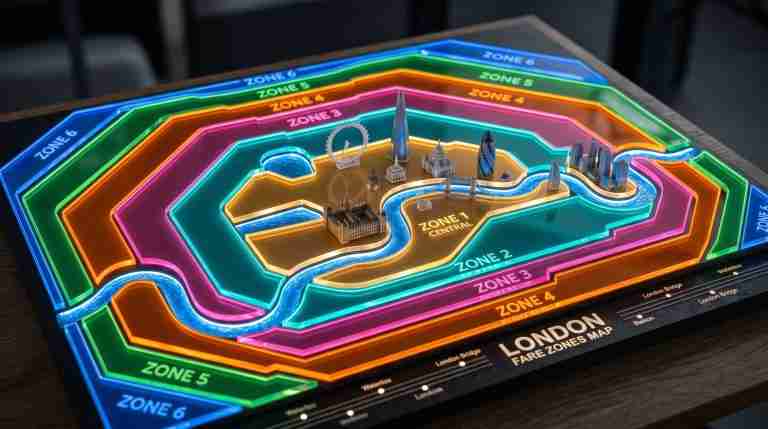
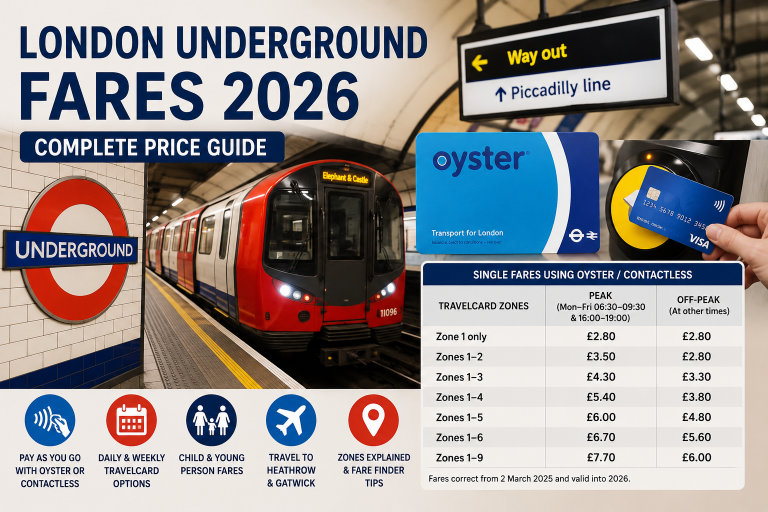
- Zones traveled (e.g., Zone 1 to Zone 2 = £2.80 peak).
- Time of travel (peak vs. off-peak fares).
- Automatic Capping:
- Daily cap: Once your total fares reach the price of a 1-Day Travelcard (e.g., £8.90 for Zones 1–2), further travel is free until 4:30 AM the next day.
- Weekly cap: After Monday–Sunday travel hits the equivalent 7-Day Travelcard cost (e.g., £44.70 for Zones 1–2), remaining trips are free.
- Pay-as-you-go: You’re charged for each individual journey based on:
- Validation & Feedback
- Successful payment: Green light + beep.
- Error: Red light + double beep (caused by insufficient funds, card clash, or incomplete prior journey).
- Receipts: View your journey history and charges via your TfL online account or bank statement.
Technical Backend: How It Works Behind the Scenes
- NFC Technology:
- Contactless cards/devices use Near-Field Communication (NFC) to transmit encrypted payment details to TfL’s readers.
- Each tap generates a unique, one-time code (tokenization) for security.
- Transaction Processing:
- TfL batches transactions overnight and charges your bank the next day.
- No card data stored: TfL only records journey details, not your card number.
- Fraud Prevention:
- If a card is reported stolen, TfL blacklists it for future travel.
- Always tap out to avoid “incomplete journey” charges (up to £9.40).
Pro Tips to Avoid Common Pitfalls
✅ Use One Card/Device: Switching cards resets fare capping.
✅ Wait for the Green Light: Rushing through gates may cause “card clash” (multiple cards detected).
✅ Check Foreign Card Fees: Non-UK cards may add FX fees (e.g., 3% with some banks).
✅ Monitor Your Spending: Set up a TfL account to track journeys and dispute errors.
What Happens If…?
- You forget to tap out?
- Charged the maximum fare (£9.40 for Tube/DLR).
- Fix it: Log into your TfL account and manually complete the journey within 48 hours.
- Your card is declined?
- Top up an Oyster card as backup or buy a paper ticket.
- Unpaid journeys may lead to penalty fares (£80 reduced to £40 if paid promptly).
Compatibility: What Works?
✔ UK & International Contactless Cards (Visa, Mastercard, Amex).
✔ Mobile Wallets (Apple Pay, Google Pay, Samsung Pay).
✔ Wearables (Garmin, Fitbit with payment enabled).
❌ Non-contactless cards, e.g., Maestro (must use Oyster/paper tickets).
Why This Matters
- Speed: 50% faster than queuing for tickets (TfL data).
- Eco-Friendly: Reduces plastic waste vs. Oyster cards.
- Tourist-Friendly: No need to navigate ticket machines in English.
Example:
A visitor from New York taps their iPhone at Paddington Station, rides to King’s Cross, and is charged £2.80 (off-peak). By day’s end, their total hits the £8.90 cap—all further travel is free until tomorrow.
3. Benefits of Contactless Payment
Contactless payments have transformed travel on the Tube, offering speed, savings, and simplicity compared to traditional ticketing. Here’s why millions of commuters and tourists now prefer tapping over tickets:
A) Cost Efficiency: Save Money Automatically
✔ No Oyster Card Deposit
- Oyster requires a £7 refundable deposit—contactless eliminates this cost entirely.
✔ Same Fares as Oyster, Better Value
- Pay-as-you-go rates are identical, but contactless adds no extra fees.
✔ Automatic Fare Capping = Free Rides After a Point
- Daily cap: Once your total fares equal a 1-Day Travelcard (e.g., £8.90 for Zones 1–2), further travel is free until 4:30 AM the next day.
- Weekly cap: After hitting the cost of a 7-Day Travelcard (e.g., £44.70 for Zones 1–2), the rest of your week’s travel is free.
- Example: If you spend £40 by Thursday, Friday-Sunday rides cost nothing.
✔ No Expiry or Loss Risk
- Unlike Oyster balances, contactless funds stay in your bank account until used.
B) Convenience: Tap and Go, No Hassle
✔ No Top-Ups Needed
- Oyster cards require topping up at machines or shops—contactless deducts fares directly from your bank account.
✔ Works with Phones and Smartwatches
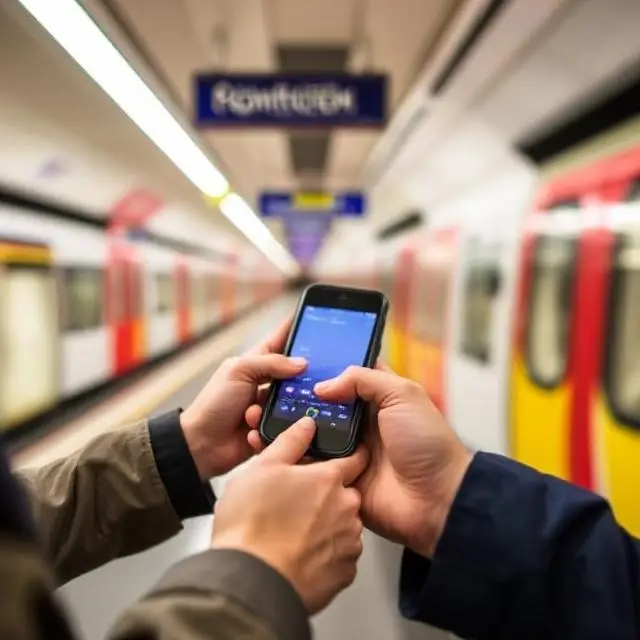
- Forgot your wallet? Apple Pay, Google Pay, or Samsung Pay work seamlessly.
- Pro Tip: Your phone’s battery can die after tapping in—just tap out with a backup card.
✔ Real-Time Journey Tracking
- Check charges instantly via your bank app or TfL’s online portal.
✔ No Queues, No Delays
- Skip ticket lines—90% of Tube users now tap contactless (TfL, 2024).
C) Visitor-Friendly: Perfect for Tourists
✔ International Cards Accepted
- Works with Visa, Mastercard, and Amex from any country.
- Note: Some banks add foreign transaction fees—use a Revolut or Wise card to avoid these.
✔ No Language Barriers
- Ticket machines require English navigation; contactless needs just a tap.
✔ Automatic Best Fare
- Tourists often overpay with paper tickets—contactless always charges the correct rate.
📊 Stat: 1 in 10 contactless users are tourists (TfL), drawn by the simplicity.
Bonus: Hidden Perks
🔹 Eco-Friendly: Reduces plastic waste (no Oyster cards).
🔹 Group Travel? Each person needs their own card/device (unlike Oyster’s “family” options).
🔹 Expense Reports: Bank statements clearly list TfL charges for reimbursement.
Key Takeaway
Contactless isn’t just a payment method—it’s the smartest way to travel on the Tube. Whether you’re a daily commuter or a first-time visitor, you’ll save time, money, and stress.
4. Contactless vs. Oyster Card
The London Underground offers two cashless payment options—contactless and Oyster—but which one is right for you? Below, we break down the key differences, costs, and ideal use cases to help you decide.
Key Differences at a Glance
| Feature | Contactless | Oyster Card |
| Deposit Required | None | £7 (refundable) |
| Fare Capping | Yes (daily & weekly) | Yes |
| Child/Student Discounts | No | Yes (Zip Oyster) |
| Top-Up Needed | No (direct bank charge) | Yes (manual top-up) |
| Visitor-Friendly | Yes (works with foreign cards) | Yes (but requires purchase) |
| Mobile Payments | Yes (Apple/Google Pay) | No |
| Lost Card Protection | Bank handles fraud | TfL can transfer balance (with fee) |
When to Use Contactless
For Most Adult Travelers
- No upfront cost (vs. £7 Oyster deposit).
- Same fares as Oyster, with automatic capping.
- Works with phones/smartwatches—no physical card needed.
For Tourists & Short-Term Visitors
- No need to buy/return an Oyster card.
- Accepts foreign-issued Visa/Mastercard (check bank fees).
For Convenience
- No topping up—just tap and ride.
- Real-time spending tracking via your bank app.
When to Use Oyster
For Children (Ages 11–15)
- Zip Oyster Photocard offers 50% discount on fares.
- Note: Under 11s travel free with a paying adult.
For Students & Railcard Holders
- 16+ Zip Oyster or 18+ Student Oyster saves 30% on weekly/monthly passes.
- National Railcard discounts (e.g., 16-25 Railcard) can be loaded onto Oyster for 1/3 off off-peak fares.
If Your Bank Charges Foreign Fees
- Some non-UK cards add 3% FX fees per transaction—Oyster avoids this.
For Budget Control
- Pre-load a set amount to avoid surprise bank charges.
Cost Comparison: Contactless vs. Oyster
| Scenario | Contactless | Oyster |
| 1-Day Travel (Zones 1-2) | £8.90 (daily cap) | £8.90 |
| 7-Day Travel (Zones 1-2) | £44.70 (weekly cap) | £44.70 |
| Initial Cost | £0 | £7 (deposit) |
| Child Fare (Zones 1-2, peak) | N/A (full fare) | £1.40 (50% off) |
→ Identical pricing for adults, but Oyster wins for discounts.
Which One Wins?
Choose Contactless If:
- You’re an adult (18+) without discounts.
- You want hassle-free, no-top-up travel.
- You use mobile payments (Apple/Google Pay).
Choose Oyster If:
- You’re a child, student, or have a Railcard.
- Your foreign bank charges high fees.
- You prefer fixed travel budgets (pre-loaded balance).
Pro Tips
🔹 Lost Oyster Card? Report it to TfL to transfer remaining balance (for a £5 fee).
🔹 Using Both? Don’t mix them—stick to one for fare capping.
🔹 Visitor Hack: If your card has fees, buy an Oyster at the airport and refund the deposit + balance before leaving.
Final Verdict
For most travelers, contactless is the best choice, but Oyster remains essential for kids, students, and budget-conscious visitors.
5. Tips for Using Contactless
Contactless payments make Tube travel effortless, but these expert tips will help you avoid pitfalls, save money, and travel smarter.
Avoid “Card Clash” (Multiple Card Errors)
Problem: If you have multiple contactless cards or devices (e.g., two credit cards in your wallet, phone + card), the reader may detect both and fail.
Solution:
- Only one card/device near the reader.
- Use a separate wallet slot for your travel card.
- Disable Express Transit Mode (if using Apple Pay) to prevent accidental scans.
What happens if it clashes?
- You may be charged twice or get an error.
- Fix it: Dispute incorrect charges via TfL’s online portal.
Check Foreign Card Fees (For International Travelers)
Non-UK Bank Cards Work (Visa/Mastercard/Amex), but:
- Some banks charge foreign transaction fees (1–3%) per tap.
- Dynamic Currency Conversion (DCC) may offer poor exchange rates.
Smart Solutions:
- Use a fee-free travel card (Revolut, Wise, Monzo).
- Check your bank’s FX policy before traveling.
- If fees are high, buy an Oyster card instead.
Always Tap Out (Avoid Maximum Fare Charges)
Biggest Mistake: Forgetting to tap out → £9.40 penalty charge (max fare).
How to Fix It:
- Log into your TfL account within 48 hours to correct incomplete journeys.
- If you see a red light at exit gates, ask staff for help immediately.
Exception:
- Buses & Trams only require tap in (no exit tap).
Monitor Your Spending & Dispute Errors
TfL Doesn’t Always Get It Right! Common issues:
- Double charges (card clash).
- Incorrect zone fares.
- Incomplete journey penalties.
How to Track & Fix:
- Check journeys online via TfL’s Contactless Portal.
- Set up auto-alerts in your banking app.
- Dispute errors within 7 days via TfL’s website.
Expired Card? Update It ASAP!
Problem: If your card expires mid-travel, TfL can’t charge you → £80 unpaid fare notice.
Solution:
- Update your card in your TfL account before it expires.
- If you get a penalty, appeal with proof of payment method update.
Use the Same Card for Fare Capping
Daily/Weekly Caps Only Work If You Stick to One Card!
- Switching cards = lose capping benefits.
- Tip: Designate one card/device for Tube travel.
Night Tube & Special Services
Works the Same!
- Contactless works on Night Tube (Friday/Saturday nights).
- Also valid on Elizabeth Line, Overground, DLR, and buses.
Final Checklist Before You Travel
✔ One card only (avoid clashes).
✔ Tap in AND out (except buses/trams).
✔ Check foreign fees if using a non-UK card.
✔ Monitor charges via TfL’s portal.
Mistake happens?
➡️ TfL’s Contactless Support can fix most issues!
6. FAQ (Answered Concisely)
Q: Can I use my phone to pay?
→ Yes (Apple Pay, Google Pay, Samsung Pay).
Q: Is contactless cheaper than paper tickets?
→ Yes—single paper tickets cost 2x more than contactless fares.
Q: What if my card is declined?
→ Use another card or buy a paper ticket; unpaid journeys may result in a £80 penalty fare.
7. Future Developments
- Rail Expansion: Plans to extend contactless to National Rail routes beyond London.
- Biometric Trials: Testing palm/facial recognition at select stations (similar to Amazon Go).
- Sustainability: Reducing plastic waste by phasing out Oyster cards by 2030.
8. Conclusion
Summary: Contactless is the fastest, cheapest, and most eco-friendly way to ride the Tube.
CTA:
“Next time you’re in London, tap your card or phone and glide through the gates—no fuss, no queues!”