Whether you are a daily commuter battling the morning rush, a tourist hopping between landmarks, or a business traveller passing through the capital, understanding London Underground fares is essential for keeping your travel costs under control. In 2026, the fare landscape shifted in a notable way — single journey prices rose while daily and weekly caps were frozen — making it more important than ever to know exactly what you will pay and how to pay less.
This complete price guide covers every fare you need to know: PAYG singles by zone, daily and weekly caps, Travelcard prices, bus fares, discount options, and practical tips that can save you real money on every trip.
What Changed in March 2026?
The most significant update came into effect on 1 March 2026, when Transport for London (TfL) implemented its latest fare revision. Here is the summary of what changed and what stayed the same: (London Underground Fares)
Pay As You Go (PAYG) single fares rose by around 6%. This applies to journeys on the Tube, DLR, London Overground, and Elizabeth line within Zones 1–6. For most passengers, individual fare increases were capped at 20p per journey, with many rising by only 10p.
Daily and weekly caps were frozen. In a consumer-friendly move, TfL froze all PAYG daily and weekly caps until at least March 2027. This means that frequent travellers who tap in and out multiple times per day will not pay more overall, even though individual journey prices edged up.
Bus and tram fares were frozen again. Mayor Sadiq Khan used City Hall funding to freeze bus and tram fares for the seventh time since 2016, keeping the single bus fare at £1.75 and the daily bus cap at £5.25.
Travelcard season ticket prices were also frozen in line with the national rail fares policy, offering further relief for commuters who prefer weekly, monthly, or annual passes.
A Zone 1 peak single journey, for example, moved from £2.90 to £3.10, while the equivalent off-peak fare went from £2.80 to £3.00. A peak journey from Upminster (Zone 6) to Cannon Street (Zone 1) increased by just 10p, from £5.80 to £5.90.
How London Underground Fares Work
Before diving into the price tables, it helps to understand the core mechanics of TfL’s fare system. (London Underground Fares)
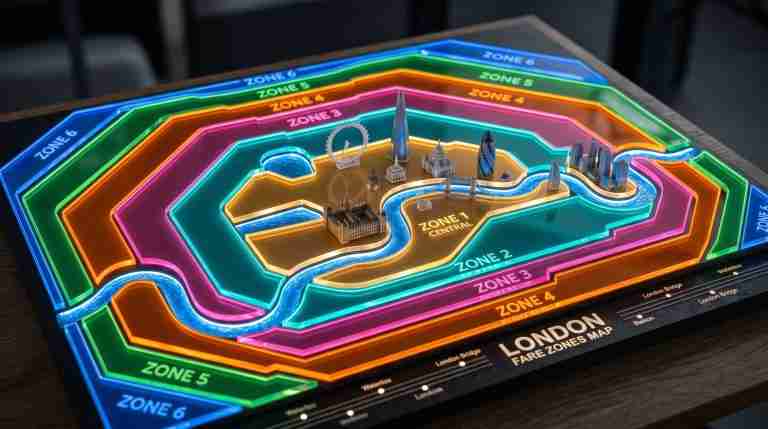
Fare zones divide London into concentric rings, numbered 1 to 9. Zone 1 covers central London — Oxford Circus, King’s Cross, Waterloo — while the outer zones stretch to places like Heathrow (Zone 6) and Amersham (Zone 9). The fare you pay is based on every zone your journey passes through, not just your start and end stations. A trip from Tottenham Hale (Zone 3) to Brixton (Zone 2) on the Victoria line, for instance, passes through Zone 1 and is therefore charged at the Zone 1–3 rate.
Peak hours are Monday to Friday, 06:30–09:30 and 16:00–19:00, excluding public holidays. All journeys outside these windows — including all day Saturday, Sunday, and every Night Tube trip — are charged at the lower off-peak rate. There is one helpful exception: if your journey starts in Zones 2–6 between 16:00 and 19:00 but ends in Zone 1, the off-peak fare still applies.
PAYG (Pay As You Go) using an Oyster card or contactless bank card is almost always the cheapest way to travel. Cash paper tickets cost a flat £7.00 for any single journey in Zones 1–6 — a significant premium over contactless fares.
PAYG Single Fares by Zone (2026)
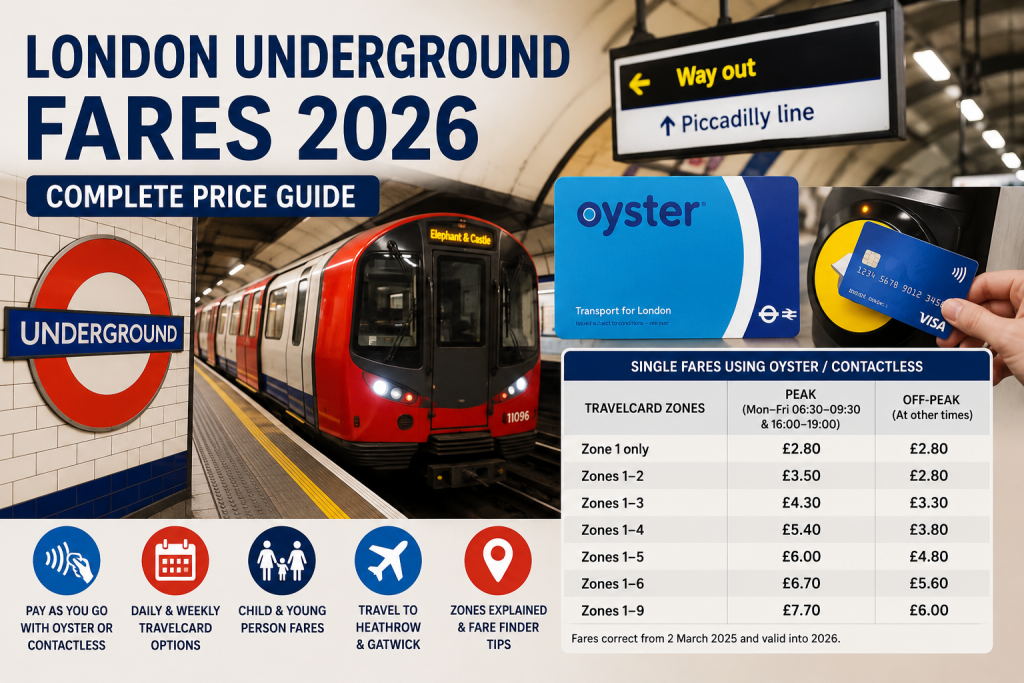
The table below shows adult PAYG single fares as of March 2026. These are identical whether you pay with an Oyster card or a contactless debit or credit card. (London Underground Fares)
| Zones Travelled | Peak Fare | Off-Peak Fare |
| Zone 1 only | £3.10 | £3.00 |
| Zones 1–2 | £3.60 | £3.10 |
| Zones 1–3 | £3.90 | £3.30 |
| Zones 1–4 | £4.80 | £3.60 |
| Zones 1–5 | £5.30 | £3.80 |
| Zones 1–6 | £5.90 | £4.00 |
| Zones 2–3 (no Zone 1) | £3.20 | £3.00 |
| Zones 2–4 (no Zone 1) | £3.60 | £3.00 |
| Zones 3–4 (no Zone 1) | £3.10 | £2.70 |
| Zones 4–5 (no Zone 1) | £3.10 | £2.70 |
| Zones 5–6 (no Zone 1) | £2.90 | £2.50 |
Source: TfL tube and rail fares / London City Hall MD3464. Child fares are set at a flat rate of £1.05 peak in 2026. Checked 14 August 2026.
Heathrow note: Tube and Elizabeth line journeys to and from Heathrow Airport are always charged at peak rates, regardless of time of day. An Elizabeth line single from central London to Heathrow rose from £13.90 to £15.50 in 2026, though passengers protected by the daily cap will not feel this increase.
Daily and Weekly PAYG Caps (2026)
Caps are the most powerful money-saving feature of London’s fare system. Once your PAYG spending reaches the daily cap, all further journeys on that day are free. Caps also accumulate into a Monday-to-Sunday weekly cap equal to the price of a 7-day Travelcard. (London Underground Fares)
All daily and weekly caps were frozen in March 2026 and will remain in place until at least March 2027.
| Zone | Daily Peak Cap | Daily Off-Peak Cap | Weekly Cap |
| Zone 1 only | £8.90 | £8.90 | £44.70 |
| Zones 1–2 | £8.90 | £8.90 | £44.70 |
| Zones 1–3 | £10.50 | £10.50 | £52.50 |
| Zones 1–4 | £12.80 | £12.80 | £64.20 |
| Zones 1–5 | £15.30 | £15.30 | £76.50 |
| Zones 1–6 | £16.30 | £16.30 | £81.60 |
Source: TfL adult fares 2026. Caps apply to Tube, DLR, Elizabeth line, London Overground, and most National Rail services in the relevant zones.
The weekly cap resets every Monday morning. This is important: if you start travelling on a Wednesday and hit your weekly cap by Friday, you begin again from zero on the following Monday rather than getting a full seven days of free travel.
Travelcard Prices (2026)
Travelcards offer unlimited travel within chosen zones for a fixed period. Unlike PAYG, they do not charge per journey — once purchased, you can travel as many times as you like. Travelcard prices were frozen in March 2026 in line with national rail fares policy. (London Underground Fares)
7-Day Travelcard Prices
| Zone | 7-Day Price |
| Zone 1 only | £44.70 |
| Zones 1–2 | £44.70 |
| Zones 1–3 | £52.50 |
| Zones 1–4 | £64.20 |
| Zones 1–5 | £76.50 |
| Zones 1–6 | £81.60 |
Monthly Travelcard prices are calculated at 3.84 times the 7-day price, and annual passes are 40 times the 7-day price.
Day Travelcard Prices
| Type | Price |
| Anytime Day Travelcard (Zones 1–6) | £23.60 |
| Off-Peak Day Travelcard (Zones 1–4) | £16.60 |
| Off-Peak Day Travelcard (Zones 1–6) | £16.60 |
Off-peak Day Travelcards are valid from 09:30 on weekdays and at any time on weekends and public holidays. For tourists exploring London over a weekend, the off-peak Day Travelcard at £16.60 can represent excellent value compared to individual PAYG fares.
Bus and Tram Fares (2026)
London’s buses remain one of the best deals in the city. All fares are frozen until at least 5 July 2026. (London Underground Fares)
- Single bus or tram fare: £1.75
- Daily bus cap: £5.25
- Hopper fare: travel on as many buses and trams as you like within one hour for the price of one journey (£1.75)
Cash is not accepted on London buses. You must pay with Oyster, contactless, or a valid Travelcard.
Oyster Card vs Contactless: Which Should You Use?
Both Oyster and contactless bank cards charge the same PAYG fares and benefit from the same daily and weekly caps. The choice comes down to your specific situation.
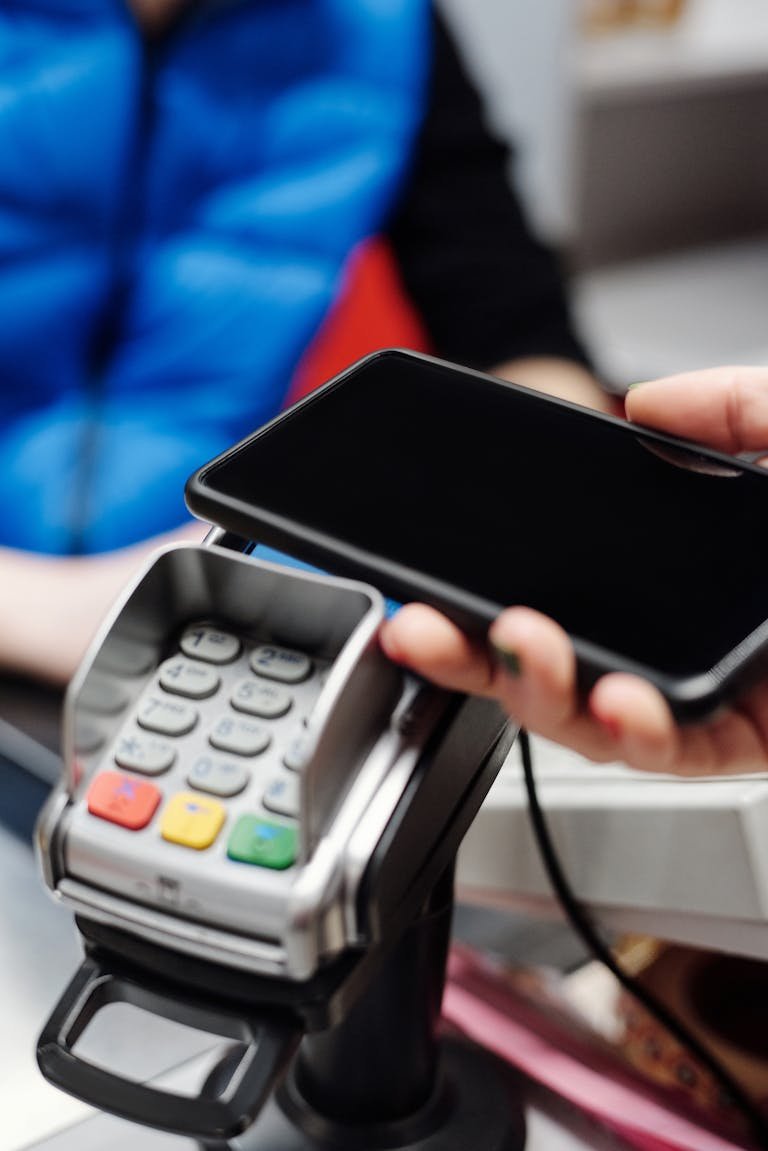
Choose contactless if you are visiting from the UK or abroad with a modern debit or credit card. It is the simplest option — no card to buy, no deposit to pay, and your capping accumulates automatically across all your contactless journeys in a day. (London Underground Fares)
Choose Oyster if you need access to concession discounts, such as a Senior Railcard reduction, an 11–15 Zip card discount, or other TfL photocards. These discounts are attached to the physical Oyster card and cannot be applied to contactless bank cards. A new Oyster card costs £10 (or £10.50 for a Visitor Oyster card ordered online), and this deposit is refundable when you return the card, minus any remaining credit used.
One crucial rule: never mix payment methods on the same day. If you tap in with your contactless card but tap out with your Oyster card (or vice versa), the system cannot link your journeys and you lose your daily capping progress entirely. Stick to one card, one device, all day.
Pink Readers: The Hidden Money Saver
One of the least-known fare features is the pink card reader — a secondary reader available at certain interchange stations that allows you to travel between outer zones without being charged for Zone 1. (London Underground Fares)
If your journey goes from, say, Zone 2 on one side of London to Zone 2 on the other side, but your train route technically passes through Zone 1 (as many do), you would normally be charged for all three zones. However, if you tap a pink reader at the interchange station, TfL records that you deliberately avoided Zone 1, and you are charged the cheaper two-zone rate instead.
This saving can amount to £1 or more per journey on qualifying routes. Key interchange stations with pink readers include Earls Court, Gunnersbury, and others on orbital routes. Always look out for the pink readers if your journey is outer-zone to outer-zone.
Discount Options and Concessions
TfL offers a range of discounted travel for eligible passengers. Most require an Oyster photocard. (London Underground Fares)
Children under 11 travel free on all Tube, bus, DLR, and Overground services when accompanied by a fare-paying adult. There is no limit on the number of children per adult.
Ages 11–15 can travel at reduced child rates using an 11–15 Zip Oyster photocard. Tourists with children in this age group should ask station staff to add the “Young Visitor discount” to an Oyster card instead, as this avoids the need to apply in advance for a Zip card.
60+ Oyster card holders can travel free on buses and trams at any time, and on Tube and rail services during off-peak hours. Eligibility depends on residency criteria.
Senior Railcard (aged 60 and over) offers one-third off PAYG fares and daily caps during off-peak hours when loaded onto an Oyster card. It is not valid during peak hours.
16–17 Saver and 18+ Student Oyster photocard offer 30% off adult PAYG fares and caps for eligible young people and full-time students.
Disabled persons may be eligible for a Freedom Pass, which provides free travel across the network.
Tips to Pay Less on the Tube
Travel off-peak whenever possible. Off-peak fares are significantly lower on many routes, and because daily caps are now the same whether you travel peak or off-peak (frozen at the same level), your cap provides less of a safety net on days when you travel entirely off-peak. Shifting your first journey to after 09:30 can reduce your per-journey costs considerably.
Use weekly capping instead of a 7-day Travelcard. If you are not certain you will travel heavily every day of the week, PAYG with weekly capping is more flexible than buying a Travelcard upfront. You only pay for what you use, up to the cap.
Plan routes that avoid Zone 1. When travelling between outer zones, check whether a direct route exists that bypasses Zone 1. Combined with a pink reader tap at the interchange, this can produce meaningful savings on each round trip.
Keep your Oyster loaded. If your Oyster card runs out of credit mid-journey, TfL will charge the maximum unstarted journey fare. Top up before you travel, or set up auto top-up linked to a bank card. (London Underground Fares)
Check the daily cap before buying a Day Travelcard. The Anytime Day Travelcard for Zones 1–6 costs £23.60, which is higher than the Zones 1–6 daily PAYG cap of £16.30. Unless you specifically need the paper ticket for a reason (such as travel with a railcard discount on a National Rail service), PAYG with capping is almost always better value.
Frequently Asked Questions
Are there return fares on the London Underground?
No. There are no return fares. Ticket machines allow you to select a “return” option, but this simply produces two single tickets at the same price. PAYG with daily capping makes return journeys automatic and cheaper for most travellers.
Can I buy a ticket on the train?
No. You must purchase a ticket, load your Oyster card, or set up contactless before boarding. There are no facilities to pay onboard any Tube service.
What happens if I forget to tap out?
TfL charges the maximum fare for your zone combination if you fail to tap out. You can appeal for a refund through the TfL website if this was a genuine error, though repeated claims may not be approved.
Do fares change for the Night Tube?
No. All Night Tube journeys are charged at the off-peak rate, regardless of which line or time you travel.
Is the Elizabeth line included in normal Tube fares?
Yes, for most journeys in Zones 1–6, the Elizabeth line uses the same PAYG fares as the Tube. The exception is the Heathrow section, where a supplement applies.
Summary: Key 2026 Fare Facts at a Glance
- PAYG single fares rose approximately 6% from 1 March 2026
- No single fare increased by more than 20p
- Daily and weekly PAYG caps are frozen until at least March 2027
- Bus and tram fares frozen at £1.75 single / £5.25 daily cap
- Travelcard season ticket prices frozen
- Cash single fare remains £7.00 for any journey in Zones 1–6
- Child PAYG peak fare is a flat £1.05
- Oyster deposit: £10 (refundable)
For the most up-to-date fare tables and to use TfL’s Single Fare Finder for specific journey prices, visit the official TfL fares page at tfl.gov.uk/fares.
Sources checked: TfL Tube and rail fares and TfL fare capping. Prices checked on 1 August 2026; confirm the current fare for your exact journey before travelling.